7 Steps That Turn a Chaotic Mailroom Into a 12-Minute Drill
7 Steps That Turn a Chaotic Mailroom Into a 12-Minute Drill
A 500-piece outbound run — invoices, bills of lading, compliance certificates — should leave the mailroom the same way a truck leaves the dock: on a schedule, with every piece accounted for. The drill below is timed at 12 minutes for a run of 500 standard 1-ounce letters, once the batch is printed, sorted, and sitting in the out tray. Twelve minutes is a target, not a boast. It only holds if the three steps before it are already done: one stamp SKU on the shelf, one way to apply it, and one person who owns the count.
Most mailrooms do not have a postage problem. They have a friction problem — three clerks buying from three places, a meter that needs attention, and a drawer full of mixed denominations that nobody wants to count. Fix the friction first, and the clock takes care of itself.
What Slows a Mailroom Down: Three Friction Points
Before changing anything, time one ordinary run with a stopwatch and write down where the minutes actually go. In almost every mailroom the answer is the same three places.
Buying is scattered. When anyone can buy stamps from anywhere, the mailroom ends up holding three different stocks at three different prices, and nobody knows which roll is genuine. One buying lane, one reorder trigger, and one verification check replace all of that.
Application is slow. Peeling single stamps from a sheet is the slowest way to post a letter. A coil in a dispenser gun is the fastest manual method, and a postage meter is faster still — but a meter carries monthly fees, supplies, and maintenance, and it only pays for itself above a volume most small mailrooms never reach. Pick one method for the standard letter and stop switching between them mid-run.
Postage is guessed. The most expensive mistake in a mailroom is not overpaying by a cent. It is guessing the weight, underpaying, and having the piece returned days later — or reaching for a higher-value stamp “to be safe” and burning the difference on every envelope. Weigh the batch, post to the weight, and keep the rate card where the scale sits.
The 12-Minute Drill: Seven Steps
Run the drill in this order. The times are targets for a 500-piece run of standard 1-ounce letters, with two people at the table.
- Sort (2 minutes). Split the batch into 1-ounce letters, heavier letters, and anything rigid, square, or oversized. Anything that is not a standard letter goes in its own pile — it takes different postage, and mixing it in is how returns happen.
- Weigh a sample (1 minute). Weigh ten pieces from the heavy pile. A 2-ounce letter takes $1.11 — a Forever stamp ($0.82) plus one additional-ounce stamp ($0.29). A square or rigid piece adds the $0.49 nonmachinable surcharge on top, so a 1-ounce square letter needs $1.31 in postage. Post the sample, not the guess.
- Count and log (2 minutes). Count the batch, write the count on the run sheet, and note the postage per piece. If the count and the stamp draw do not match at the end, the run is not finished.
- Load the gun (1 minute). One coil of Forever Flag stamps in the dispenser, one spare coil on the table. Coils fit applicator guns; sheets do not, and that is the whole reason to standardize on coils for volume work.
- Apply (4 minutes). One person feeds, one person stamps. Keep the finished stack in trays of 50 so a miscount shows up as a short tray instead of a short run.
- Spot-check five (1 minute). Pull five finished envelopes at random. Check that the stamp is straight, fully adhered, and the right denomination for the pile it came from. A stamp peeling at the corner is a return waiting to happen.
- Close the run (1 minute). Band the trays, update the bin count, and drop the run sheet in the log. If the open coil is running low, the reorder trigger — not a memory — decides whether to order.
| Step | Target time (500 pieces) | What can go wrong |
|---|---|---|
| Sort | 2 minutes | Rigid pieces mixed into the standard pile |
| Weigh a sample | 1 minute | Guessing weight, then paying for returns |
| Count and log | 2 minutes | No count, so a short run is discovered by the customer |
| Load the gun | 1 minute | Wrong coil loaded; mixed denominations |
| Apply | 4 minutes | Peeling sheets by hand instead of a coil gun |
| Spot-check five | 1 minute | Loose stamps, wrong denomination on the heavy pile |
| Close the run | 1 minute | Bin count not updated; reorder missed |
Best Deals on Forever Stamps
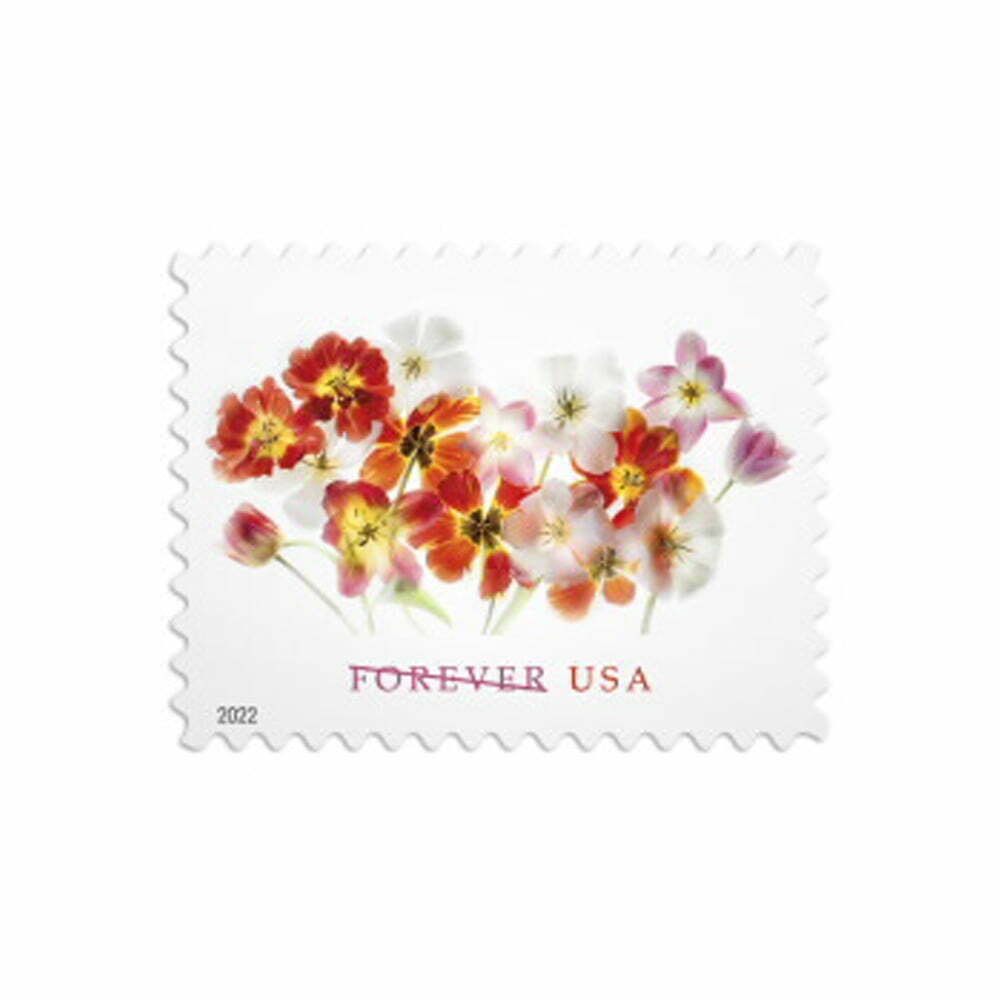


The Procurement Map: One Primary Lane, One Backup Lane
In freight, a lane you cannot rely on is not a lane. Postage buying works the same way: one primary lane that handles the regular volume, one backup lane for emergencies, and a dead end that stays blocked.
| Lane | Source | Use it for | Price basis |
|---|---|---|---|
| Primary | A verified bulk seller or the USPS Postal Store, on a quarterly purchase order | Regular volume — coils of Forever stamps, ordered before the bin runs dry | Face value $0.82 per 1-ounce stamp; bulk packs priced from face value |
| Backup | The post office counter, or an office-supply store at the counter price | Emergency top-ups only, when the primary lane is out of stock | Face value — $0.82 per 1-ounce stamp, no discount, no surprise |
| Dead end | Unknown websites, social-media ads, and any seller offering 20–50% below face value | Nothing. Block it. | The Postal Inspection Service flags 20–50% below face value as the counterfeit tell |
That is the entire buying policy, and it fits on an index card. The mistake to avoid is the third lane: a batch of counterfeit postage does not just cost the price of the stamps. It costs the mailing — seized or returned pieces, rework, and a customer who got their invoice late. The checks that keep a mailroom out of that lane are the same ones in our guide to buying discount stamps safely: a seller with a verifiable U.S. address and tax ID, a receipt that names the seller, and a five-stamp inspection on arrival.
For the regular order itself, the practical way to keep the primary lane stocked is to buy in the same place every time. If you run a high-volume mailroom and want the drill to work without a weekly buying errand, start with discounted Forever stamps for high-volume mailing in bulk coils, and set the reorder trigger below so the order goes out before the bin is empty.

One SKU, Two Bins: The Standardization Rule
High-volume work punishes variety. Every extra stamp design on the shelf is another count to track, another chance to grab the wrong denomination, and another reason a run stops while someone checks. Standardize the standard letter on one SKU: a Forever Flag coil. Holiday cards and special mailings can use other designs — they are planned runs, not the daily drill.
The rule that makes one SKU work is the two-bin system. Keep it physical, not digital: a green bin holds full coils, a red bin holds the open coil in use. When the green bin drops below five coils, the order goes out that day. No one has to remember, and no one has to guess whether there is enough for tomorrow’s run.
Two details from the receiving dock belong in the same rule. First, pull five coils from every replenishment and check them before they reach the bin — perforations clean, gum holding, print sharp, denomination right. A bad coil found at the shelf costs a minute; a bad coil found mid-run costs the run. Second, keep coils dry and flat. Heat and humidity curl the backing and weaken the gum, and a stamp that will not stay on the envelope is a stamp you paid for twice.
>
What the Drill Costs: A Worked Example
Rates checked November 2026. A Forever stamp covers a 1-ounce First-Class letter at $0.82. Each additional ounce adds $0.29, so a 2-ounce letter is $1.11 and a 3-ounce letter is $1.40. A postcard is $0.65, a 1-ounce large envelope is $1.69, and a rigid or square letter adds the $0.49 nonmachinable surcharge — $1.31 for a 1-ounce square letter. International mail takes a Global Forever stamp at $1.75. Metered mail is $0.78 a piece, but only through a meter, with its fees on top.
The worked example below uses one stated assumption: a mailroom sending 500 standard 1-ounce letters a day, five days a week, 52 weeks a year — 130,000 letters a year. Change the volume and the arithmetic changes with it; the method does not.
| Line | Math | Cost |
|---|---|---|
| One run, 1-ounce letters | 500 × $0.82 | $410.00 |
| One run, 2-ounce letters | 500 × $1.11 | $555.00 |
| One run, 1-ounce square letters | 500 × $1.31 | $655.00 |
| One week, 1-ounce letters | 5 × $410.00 | $2,050.00 |
| One year, 1-ounce letters | 260 × $410.00 | $106,600.00 |
| Cost of a 1¢ rate rise, one year | 130,000 × $0.01 | $1,300.00 |
Two conclusions fall out of that table. First, the denomination matters more than the discount: posting a 2-ounce letter with a single Forever stamp does not save $0.29, it returns the letter. Second, a Forever stamp locks the rate at the time of purchase — buy the coil at $0.82 and it still covers a 1-ounce letter after the next rate rise, which is the only honest way a stamp “saves” money. Anyone promising a coil far below face value is not selling that lock. They are selling the dead-end lane, and the full check for that is in our bulk buying guide.
For pieces that are not standard letters — rigid, square, or over 3.5 ounces — the surcharge and combination math is laid out in our non-machinable stamp guide, and the broader case for buying in bulk, including when presort makes sense, is in our bulk mailing guide. First-Class presort starts at 500 pieces per mailing, which is exactly the size of one drill run — a mailroom already running the drill is already at presort scale, and a mail house can quote the rest.
Run It Tomorrow: A One-Page Checklist
Print this, tape it to the bench, and run it once before changing anything else.
- One SKU on the shelf for the standard letter: Forever Flag coils.
- One buying lane, one backup lane, and the counterfeit lane blocked.
- Green bin above five coils, or the order goes out today.
- Five coils checked on arrival; five envelopes checked per run.
- Scale on the bench, rate card next to it, no guessing weight.
- Run sheet filled in: count, postage per piece, bin count after.
- Anything rigid, square, or over 2 ounces in its own pile, posted at its own rate.
The verdict is simple: a mailroom does not need more equipment. It needs one stamp, one method, one count, and a clock. Run the drill for a week and the 12 minutes will either hold or tell you exactly which step is slow — and that, not a new machine, is the thing to fix next.
Frequently Asked Questions
How long should a 500-piece run take?
Twelve minutes is a realistic target once the batch is printed and sorted, with two people and a coil gun — two minutes to sort, one to weigh a sample, two to count, one to load, four to apply, one to spot-check, and one to close. The first week will be slower. Time the steps, not the whole run, and fix the slowest one.
Do I need a postage meter for high volume?
Not necessarily. A meter prints postage at $0.78 a piece for a 1-ounce letter, 4¢ under the $0.82 stamp rate, but it carries monthly fees, supplies, and maintenance. Below a few hundred pieces a day, stamps in coils are usually cheaper all-in. Above that, get a written quote for the meter and compare the total, not the per-piece rate.
What postage does a 2-ounce letter need?
$1.11: one Forever stamp ($0.82) plus one additional-ounce stamp ($0.29). A 3-ounce letter is $1.40. Add $0.49 if the piece is rigid, square, or otherwise nonmachinable.
How do I spot counterfeit discount stamps?
Price is the first test: the Postal Inspection Service warns that stamps sold 20–50% below face value are the counterfeit pattern. Buy from a seller with a verifiable U.S. address and tax ID, keep the receipt, and inspect five stamps from every delivery before they reach the bin.
Editor’s note: Prices and rates in this article were checked in November 2026. USPS last adjusted First-Class Mail prices on July 12, 2026: a Forever stamp is $0.82 for a 1-ounce letter, each additional ounce is $0.29, a postcard is $0.65, and a Global Forever stamp is $1.75. This article was rewritten in November 2026 to replace an earlier first-person account with a general mailroom procedure; the drill times are targets for a stated 500-piece run, and the worked costs assume 500 1-ounce letters per run.
Expert Usage Tips for Forever Stamps
- 👉 USPS Animal Stamps: A Celebration of Wildlife Diversity
- 👉 The Vegas Spread: How I Built a Cash Flow Fortress Using Stamps
- 👉 The Ultimate Guide to Non‑Machinable Stamps: USPS Rules, 2026 Rates, and Smart Ways to Save

Stamp enthusiast and part‑time columnist based in Los Angeles. With a background in office administration and a personal passion for collecting Forever Stamps, she provides readers with practical tips on buying, storing, and using stamps effectively.